RV Water System Maintenance: A Complete Guide
Proper RV water system maintenance is essential for safe drinking water, preventing costly repairs, and extending the life of your recreational vehicle’s plumbing. Whether you’re a full-time RVer or weekend warrior, following a regular maintenance schedule will keep your fresh water tanks, gray water system, and black water tanks functioning smoothly for years to come.
Understanding Your RV Water System Components
Before diving into maintenance, it’s important to understand the three main components of your RV’s water system:
Fresh Water System: This includes your fresh water tank, water pump, water heater, faucets, and all supply lines that deliver clean water throughout your RV.
Gray Water System: This collects wastewater from sinks and showers, storing it in the gray water tank until you can dump it at a designated facility.
Black Water System: This handles toilet waste and is stored in the black water tank, requiring special care and maintenance.
Essential RV Water System Maintenance Tasks
Sanitizing Your Fresh Water Tank
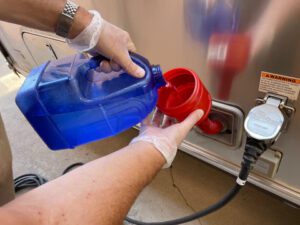
Sanitizing your RV’s fresh water system should be done at the beginning of each camping season and every few months during active use. Here’s how to properly sanitize your system:
Start by draining your fresh water tank completely, including the water heater. Mix a sanitizing solution using one-quarter cup of household bleach for every 15 gallons of tank capacity. Fill your fresh water tank with this mixture and top it off with clean water. Turn on all faucets, both hot and cold, until you smell bleach at each outlet. Let the solution sit in your system for at least 12 hours, preferably 24 hours. After sanitizing, drain the entire system and refill with fresh water, flushing all faucets until the bleach smell disappears completely.
Recommended Product: Camco TastePURE Water System Cleaner & Deodorizer – A safer alternative to bleach that effectively sanitizes your RV water system.
Water Pump Maintenance
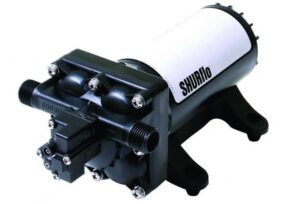
Your RV water pump is the heart of your fresh water system. Regular maintenance prevents failures and ensures consistent water pressure. Check the pump’s strainer or filter monthly and clean or replace it as needed. Listen for unusual noises that might indicate worn bearings or debris in the system. Winterize your pump properly before freezing temperatures arrive, and consider installing a water pump filter to protect it from sediment damage.
Recommended Product: Shurflo Revolution 4008 Water Pump – One of the most reliable and quietest RV water pumps on the market, perfect for replacement or upgrades.
Water Heater Care
RV water heaters require regular attention to prevent sediment buildup and maintain efficiency. Drain and flush your water heater at least twice per year, or more frequently if you’re in areas with hard water. Remove the drain plug and anode rod, then use a tank rinse wand to flush out sediment and mineral deposits. Inspect the anode rod during each flush and replace it when it’s reduced to less than 50% of its original diameter. This sacrificial rod protects your tank from corrosion and is a critical maintenance item that many RVers overlook.
Recommended Products:
- Camco Water Heater Tank Rinser – Makes flushing your water heater quick and thorough
- Suburban Water Heater Anode Rod – Essential replacement part to prevent tank corrosion
Maintaining Water Lines and Connections
Inspect all visible water lines regularly for signs of wear, cracks, or leaks. Check connections at the water pump, water heater, and under sinks for tightness. Replace any worn or damaged lines immediately to prevent water damage. Consider upgrading to braided stainless steel water lines in high-stress areas for added durability and peace of mind.
Recommended Product: Beaquicy Braided Stainless Steel Water Hose – Superior to standard vinyl hoses for drinking water safety and durability.
Gray Water Tank Maintenance
Your gray water tank requires regular attention to prevent odors and clogs. Flush the tank with clean water after each dump to remove soap residue and debris. Use RV-specific gray water tank treatments to control odors and break down buildup. Avoid letting the tank sit full for extended periods, as this can lead to strong odors and bacterial growth. Every few months, perform a deep clean by filling the tank with water and dish soap, driving around to agitate the mixture, then dumping and rinsing thoroughly.
Recommended Product: Happy Campers Organic RV Holding Tank Treatment – Works effectively in both gray and black tanks without harsh chemicals.
Black Water Tank Maintenance
The black water tank demands the most attention in your RV water system. Always keep several inches of water in the tank with appropriate black tank treatment to control odors and break down waste. Use plenty of water when flushing to help break down solids and prevent pyramid plugging. Only use RV-specific toilet paper that breaks down quickly. Perform regular deep cleans using tank rinse systems or specialty cleaning products designed for RV black tanks.
Recommended Products:
- Unique RV Digest-It Holding Tank Treatment – Powerful enzyme-based treatment for black tanks
- Scott Rapid-Dissolving RV Toilet Paper – Specifically designed to break down quickly in RV systems
- Camco 39062 RV Flexible Swivel Stik – Essential tool for thorough black tank cleaning
Preventing Frozen Water Lines
Winterizing your RV water system is crucial if you camp in freezing temperatures or store your RV during winter months. Drain all water from your fresh, gray, and black tanks. Remove water from the water heater by opening the drain plug and pressure relief valve. Use either RV antifreeze or compressed air to clear all water lines. Pour RV antifreeze into all drains and the toilet to protect P-traps and seals. Don’t forget to bypass your water heater before adding antifreeze to avoid wasting product.
Recommended Product: Camco RV Winter Readiness Kit – Complete kit with antifreeze, hand pump, and everything needed for winterization.
Water Quality Testing and Filtration
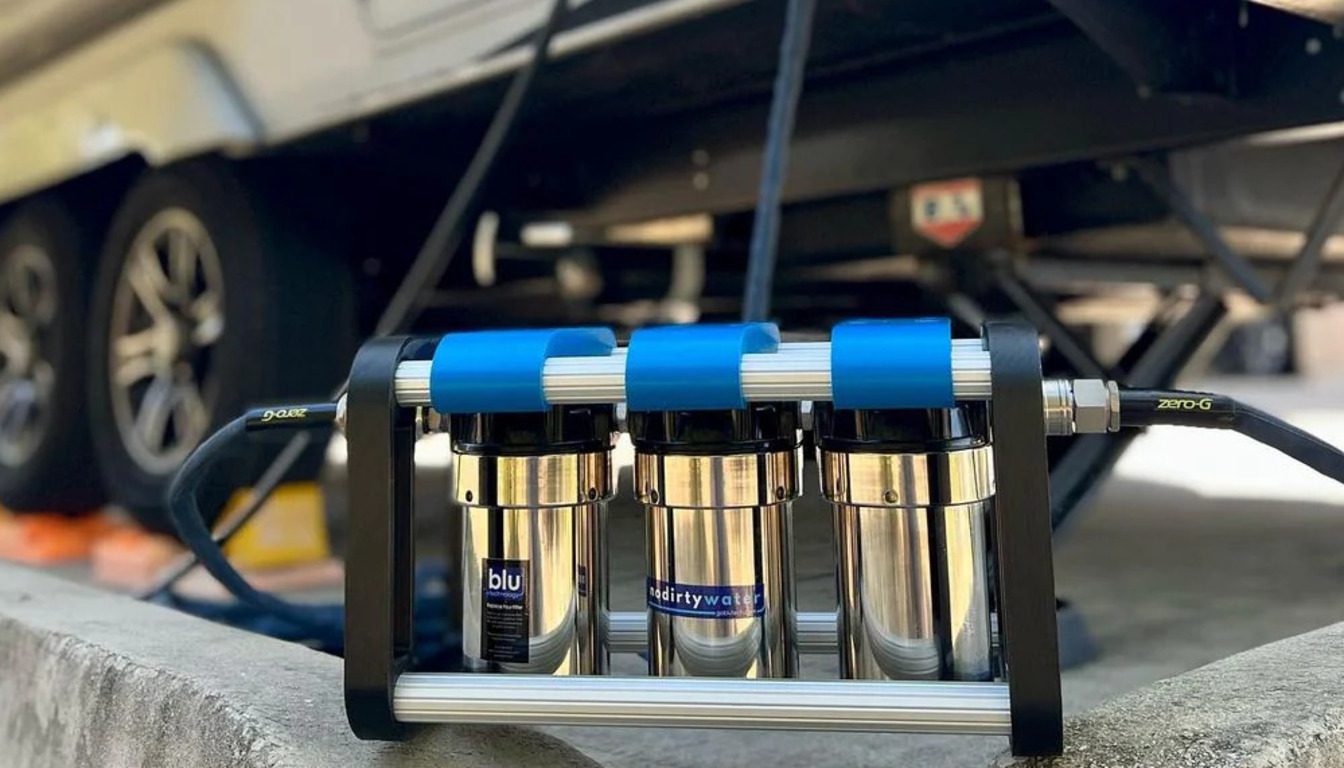
Installing a quality water filtration system protects both your health and your RV’s plumbing. Test your water quality periodically, especially when connecting to unfamiliar water sources. Consider a multi-stage filtration system that removes sediment, improves taste, and filters out harmful contaminants. Replace filter cartridges according to manufacturer recommendations, typically every few months depending on water quality and usage.
Recommended Products:
- Camco EVO Premium RV Water Filter – Advanced filtration removes sediment, chlorine, and bad tastes
- Culligan RV-800 Exterior Pre-Tank Filter – Protects your entire system from sediment at the source
Common RV Water System Problems and Solutions
Low Water Pressure
If you’re experiencing low water pressure, check your water pump first to ensure it’s functioning properly. Inspect inline filters and replace them if clogged with sediment. Verify that your fresh water tank has adequate water levels. Check for kinked supply lines or partially closed valves that might restrict flow.
Foul Odors
Odors in your RV water system usually indicate bacterial growth or improper tank maintenance. Sanitize your fresh water system thoroughly. Ensure gray and black tanks are being dumped and flushed regularly. Check that P-traps haven’t dried out, allowing sewer gases to enter your living space. Use appropriate tank treatments consistently to control odor-causing bacteria.
Leaking Faucets or Fixtures
Address leaking faucets promptly to prevent water damage. Most leaks can be fixed by replacing worn washers, O-rings, or cartridges. Keep a basic plumbing repair kit on hand with common replacement parts. For persistent leaks, consider upgrading to higher-quality fixtures designed specifically for RV use.
Recommended Product: Danco RV Plumbing Repair Kit – Comprehensive kit with O-rings, washers, and common parts for quick fixes.
Creating a Maintenance Schedule
Consistency is key to maintaining your RV water system. Create a maintenance schedule and stick to it:
Weekly (during active use): Inspect for leaks, check tank levels, ensure proper drainage
Monthly: Replace water filters, deep clean gray tank, check water pump operation
Seasonally: Full system sanitization, inspect all connections, check water heater anode rod
Annually: Replace water heater anode rod, deep clean black tank, inspect and replace worn components
Essential RV Water System Maintenance Kit
Keep these items on hand for comprehensive water system maintenance:
- Water system sanitizer or bleach
- Gray and black tank treatments
- RV antifreeze (non-toxic)
- Water pressure regulator
- Replacement water filters
- Basic plumbing tools and parts
- Water testing kit
Final Thoughts on RV Water System Care
Maintaining your RV water system doesn’t have to be complicated or time-consuming. By following these guidelines and staying on top of regular maintenance, you’ll enjoy clean, fresh water throughout your travels while avoiding costly repairs down the road. Remember that prevention is always easier and less expensive than repair, so make water system maintenance a priority in your RV care routine.
Your RV is your home away from home, and just like your house, it requires regular attention to keep everything running smoothly. A well-maintained water system means more time enjoying the RV lyfestyle and less time dealing with plumbing problems. Take care of your water system, and it will take care of you for many years of happy camping adventures.